
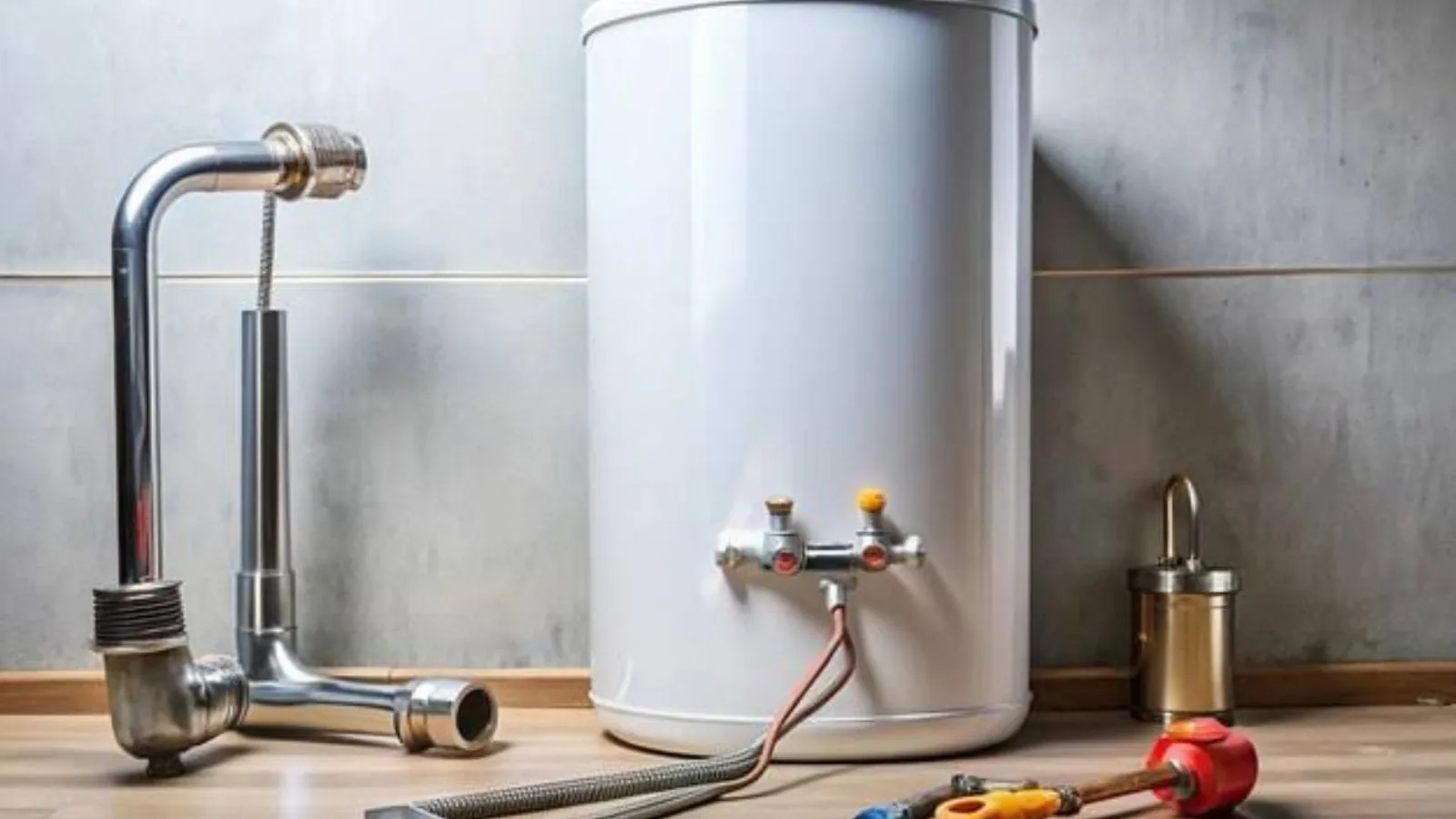
Emergency Water Heater Leak Cleanup in Monmouth Junction, NJ
A failed tank can release 40 to 80 gallons of water in minutes. Call the 24/7 line for water heater leak cleanup in Monmouth Junction.
A water heater that leaks or fails is an emergency, because a standard tank holds roughly 40 to 80 gallons that can reach the floor within minutes. The dispatch line is open 24/7 for exactly this kind of call.
Shut off the cold water supply valve on top of the heater, turn off the gas or the electric breaker to the unit and keep everyone out of the water. If the heater is gas and you smell gas, leave the house and call the gas utility or 911 first.
Water heater leak: first steps
- Cut the water.Turn the cold supply valve above the heater clockwise. If it will not close, shut the main.
- Cut the fuel.Switch the breaker off for an electric heater, or turn the gas control to off for a gas unit. Do not touch a wet electric heater with wet hands.
- Keep clear.Water can be hot enough to scald, and a wet floor can hide an energized cord.
- Call the dispatch line.Report the location, how long it ran and what is near the floor, such as finished walls or stored boxes.
Gas smell or standing water at the heater
If you smell gas, leave the house and call the gas utility or 911 from outside. If water is deep enough to touch the burner area, an outlet or the panel, do not go near it. Call the utility or 911 before you call the restoration line.
Why water heaters fail
Tanks fail at the seams, at the bottom where sediment sits, or at fittings and relief valves. A dripping temperature and pressure relief valve points to excess pressure or temperature, while rust-colored water around the base points to a corroded tank that is likely near the end of its life.
Slow leaks are easy to miss when the heater sits in a utility closet or on a finished basement floor. A damp spot on carpet, a musty smell or peeling baseboard paint can all trace back to a small, steady drip.
How we clean up a water heater leak
Water from a heater is usually clean at first, so it is Category 1 if it is caught quickly. After pumping and extraction, moisture meters check the floor, wall base and anything that sat in the water, and thermal imaging shows where water traveled behind drywall.
Wet baseboard is often removed and replaced, and drywall that wicked more than a few inches is cut back. Air movers and LGR dehumidifiers then dry what remains. Our water extraction page describes the first stage.
| Heater location | Usual path of water | Typical repair |
|---|---|---|
| Basement utility area | Concrete floor, wall base, stored items | Extraction, drying, basement cleanup. |
| Garage | Slab, drywall at the base | Extraction, baseboard removal, drying. |
| Closet on a main floor | Subfloor, carpet, adjacent rooms | Pad removal, subfloor drying. |
| Attic or upstairs closet | Ceiling and walls below | See ceiling water damage. |
Water heater leaks in Monmouth Junction homes
The census recorded 3,170 housing units in Monmouth Junction in 2020, compared with 919 in 2010, so a large share of heaters in the community are in newer homes where units sit in closets, garages and finished basements. A tank that leaks in a finished space damages more than one in an open utility area.
Replacing a water heater is plumbing or gas work, and permits are issued through the township's Code Enforcement Department. A licensed plumber handles the replacement while we handle the drying.
Insurance and water heater failures
Policies often cover sudden tank failure but not the heater itself or damage from long-term leaks. Photograph the tank, the label and the water, and keep the failed unit if your insurer asks for it. The claim decision stays with your insurer, and we provide a written scope of the cleanup and drying.
Tank leaking now? Shut the supply and call 24/7.
Call about a water heater leakFrequently asked questions
Do you handle water heater leak emergencies at night or on weekends in Monmouth Junction?
Yes. Tanks often fail overnight, and the line at (732) 352-9660 is open 24/7. Shut the cold supply and the fuel first, then call and describe where the heater sits.
Will the water heater need to be replaced?
A leak from the tank body means the tank has failed and needs replacement. A leaking valve or fitting may be repaired. A licensed plumber makes that call.
How much water is in a typical tank?
Common residential tanks hold about 40 to 80 gallons. Not all of it spills, but a failure can release a large share in minutes, which is why quick action matters.
Does drywall need to be removed after a heater leak?
It depends on how high the water wicked. Moisture meters show whether the lower section of drywall can dry in place or has to be cut out and replaced.
Active water damage in Monmouth Junction?
Call the 24/7 line and describe what you see. A dispatcher explains the scope and the price before any work starts.
Call (732) 352-9660