
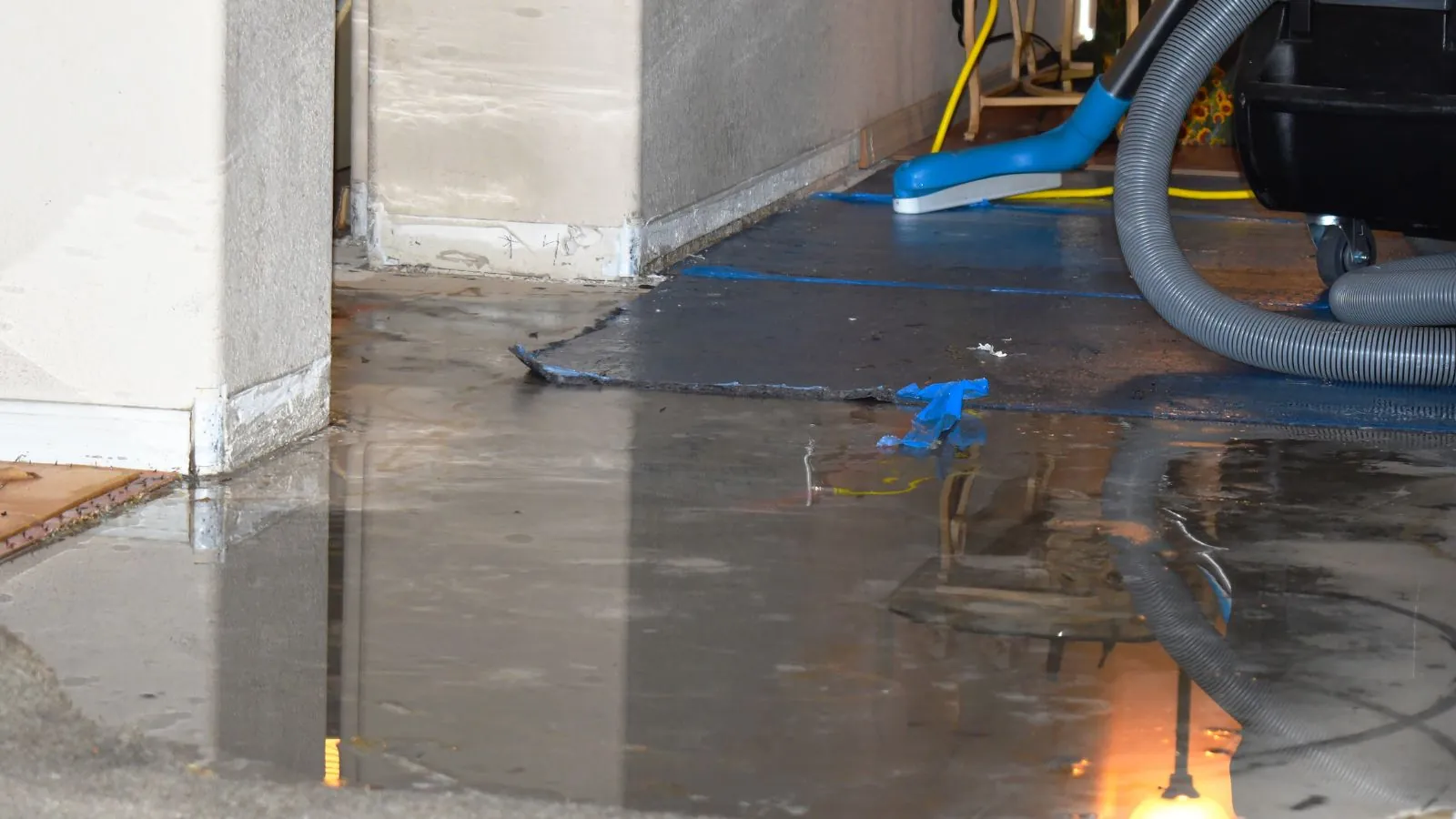
Emergency Water Extraction in Monmouth Junction, NJ
Standing water has to come out before anything else can start. Call the 24/7 line for emergency water removal in Monmouth Junction, Kendall Park and Dayton.
If water is standing on your floor right now, treat it as an emergency, because every hour lets it wick further into drywall, baseboards and subflooring. The dispatch line is open 24/7, including nights and weekends, so call as soon as you see it.
While you wait, stop the source if you safely can, lift valuables and furniture legs off the wet floor and keep people and pets out of the water. Leave power alone unless the panel is dry and reachable.
When standing water is an emergency
Water extraction is the removal of standing water with pumps, wet vacuums and truck-mounted or portable extraction units. It is the first mechanical step in water damage restoration, and it comes before drying, because dehumidifiers cannot work against inches of water on the floor.
Call right away when water is pooled in a basement, spreading across a finished floor, soaking carpet or dripping through a ceiling into a room below. A few inches of clean water from a broken line is a different job from groundwater that came through a foundation wall, and the dispatcher sorts that out in the first call.
Do not enter water near live power
Water that touches outlets, extension cords, a furnace or a panel can carry current. If you see water at or above outlet height, or the basement floor is flooded around the panel, stay upstairs and call the electric utility or 911 before you call us. Never use a household vacuum on standing water.
How water extraction works
- Source check.The crew confirms the source is stopped, because extracting from a running leak only chases the water.
- Pumping.Submersible pumps move deep water out through hoses to a safe discharge point. Truck-mounted or portable extraction units then pull the remaining water from carpet, pad and hard floors.
- Moisture mapping.A moisture meter and thermal imaging camera show how far the water traveled into walls and subfloors, which sets the drying plan.
- Hand-off to drying.Once the standing water is gone, air movers and LGR dehumidifiers take over. See structural drying and dehumidification for that stage.
Water category decides what can be saved
Water is sorted into three categories. Category 1 comes from a clean supply line, Category 2 carries some contamination such as washing machine or dishwasher discharge, and Category 3 is grossly contaminated, such as sewage or floodwater from outside.
Category 1 water caught quickly often lets carpet and pad dry in place. Category 2 and 3 water usually means the pad and any porous material it touched come out, because cleaning cannot make them safe again.
| Situation | Typical approach | Main concern |
|---|---|---|
| Burst supply line, caught within hours | Extract, then dry in place | Water wicking up drywall. |
| Washing machine or dishwasher overflow | Extract, remove pad, sanitize | Category 2 contamination. |
| Groundwater through a basement wall | Pump out, remove porous finishes | Contamination and repeat seepage. |
| Sewage backup | Containment and removal | Category 3 safety, see sewage backup cleanup. |
Water extraction in Monmouth Junction homes
Monmouth Junction sits about 79 feet above sea level, and surface water in the community drains southwest toward Heathcote Brook and Devils Brook, which feed the Millstone River. After a heavy rain, below-grade rooms and window wells are where water shows up first.
The census counted 3,170 housing units here in 2020, up from 919 in 2010, so many homes have finished basements, laundry rooms on upper floors and newer appliances. Each of those can put water on a floor quickly, and a second-floor leak travels down through ceilings into the rooms below.
When the cause is rising water outside rather than a failed pipe inside, the job moves toward flood damage cleanup or basement water damage, where contamination and repeat seepage change the plan. A leak that started inside a wall may continue on to wall and drywall repair.
What to have ready when you call
Where the water is
Name the rooms and floors, and say whether it is still spreading.
What started it
A pipe, an appliance, rain or a backup. Even a guess helps the dispatcher choose equipment.
How long it has been wet
Hours matter more than days, since drying targets and material decisions depend on it.
Power and safety
Say if water is near outlets, a panel or a furnace so the crew arrives prepared.
The industry reference for this work is ANSI/IICRC S500, which defines the water categories and the drying goals that follow extraction.
Insurance and extraction
Insurers usually ask for photos of the water before it is removed and a record of what was done. Take pictures of the standing water, the affected rooms and any damaged belongings first, then let extraction proceed. The New Jersey Department of Banking and Insurance notes that flood generally needs a separate policy, so ask your insurer how your loss is classified before assuming coverage.
Standing water in your home? Dispatch is open 24/7.
Call for water extractionFrequently asked questions
Do you handle water extraction emergencies at night or on weekends in Monmouth Junction?
Yes. The line at (732) 352-9660 is answered around the clock, including nights, weekends and holidays. Tell the dispatcher where the water is and what started it, and the scope and price are explained before work starts.
How is water extraction different from drying?
Extraction removes the standing and absorbed bulk water with pumps and extraction units. Drying then removes the moisture trapped in walls, floors and framing using air movers and dehumidifiers. Both are needed, and extraction always comes first.
Can I use a shop vacuum myself?
A wet-dry vacuum can help with a small spill, but not with standing water near outlets or cords, and it will not reach water under flooring or inside walls. For anything more than a puddle, call so moisture readings can show what is still wet.
Will the carpet have to come out?
It depends on the water category and how long the carpet stayed wet. Clean water caught early often lets carpet dry in place, while contaminated water usually means the pad and sometimes the carpet are removed.
Active water damage in Monmouth Junction?
Call the 24/7 line and describe what you see. A dispatcher explains the scope and the price before any work starts.
Call (732) 352-9660