
Structural Drying and Dehumidification in Monmouth Junction, NJ
Drying a structure means moving air, removing moisture and measuring until readings are normal. Call for structural drying and dehumidification in Monmouth Junction.
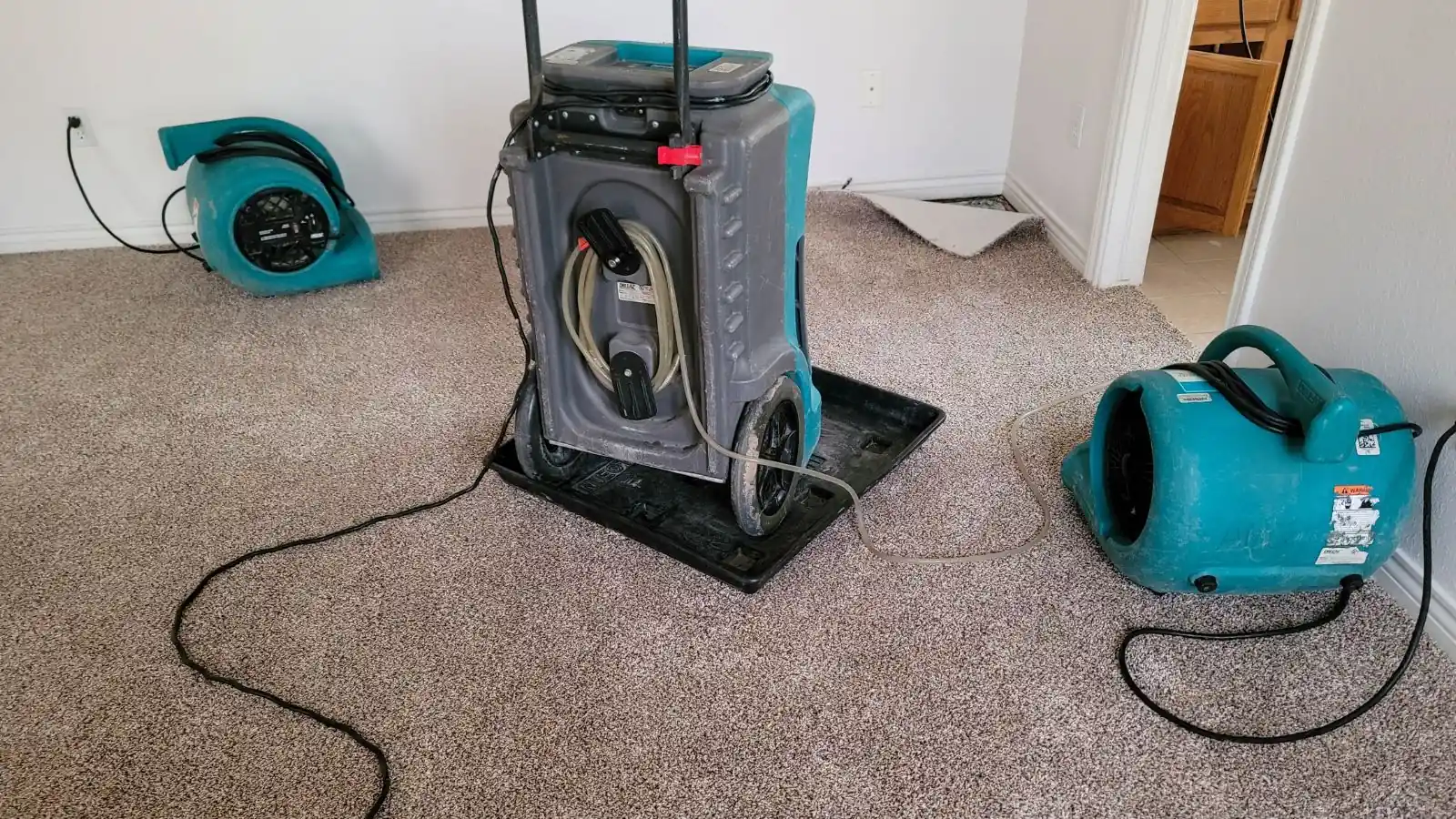
Structural drying is the controlled removal of moisture from walls, floors, ceilings and framing after water damage. It combines air movers, LGR dehumidifiers, moisture meters and a thermal imaging camera, and it is complete only when readings match a dry reference.
This page explains the process and the equipment. If water is still spreading, start with water extraction and call the 24/7 line at (732) 352-9660.
What water mitigation means
Water mitigation is the work that limits and reverses water damage before repairs begin, including stopping the source, removing water, drying and monitoring. It is separate from reconstruction, which replaces drywall, flooring and finishes.
Mitigation done right keeps the rebuild small. Material that dries in place does not have to be replaced, which is why drying is documented with readings and not guessed.
Symptoms that mean a structure is still wet
- A musty smell that returns after cleanup.
- Baseboards or drywall that feel cool or damp.
- Paint bubbling, flaking or stained after a leak was fixed.
- Flooring that cups, buckles or lifts.
- Condensation on windows near a wet area.
- Mold appearing weeks after a water event.
These symptoms can appear even when a surface looks dry. A moisture meter and thermal imaging camera show what the eye cannot.
The drying equipment and what each piece does
Air movers
High-velocity fans that push dry air across wet surfaces and into cavities, speeding evaporation.
LGR dehumidifiers
Low grain refrigerant units that pull moisture out of the air even when humidity is already low.
Moisture meters
Pin and pinless meters that read moisture content in drywall, wood and concrete.
Thermal imaging camera
Shows temperature differences that mark wet areas behind surfaces without opening them.
Injection and cavity drying
Warm, dry air delivered into wall cavities and under cabinets or floors.
Hygrometers
Measure temperature and humidity in the room so drying conditions stay on target.
How drying is done and checked
- Moisture mapping.The crew reads walls, floors and ceilings and records the affected area and the readings.
- Equipment placement.Air movers and dehumidifiers are set according to the size of the wet area and the water category.
- Daily monitoring.Readings are taken each visit and equipment is moved or removed as areas dry.
- Final verification.Drying ends when materials meet the dry standard, not when a set number of days has passed.
The industry reference for this work is ANSI/IICRC S500, which describes water damage restoration practice. It is a standard for the industry, and we cite it as guidance, not as a claim about any person or firm.
| Material | Drying behavior | Common result |
|---|---|---|
| Drywall | Absorbs fast, dries slowly if painted | Dried in place if caught early, cut out if soaked. |
| Hardwood | Swells and cups, needs slow controlled drying | See hardwood floor repair. |
| Carpet and pad | Pad holds water | Pad usually replaced, see carpet water damage. |
| Concrete | Holds moisture for a long time | Surface readings guide how long equipment stays. |
Structural drying in Monmouth Junction
Local conditions affect drying. Central New Jersey summers are humid, and a dehumidifier does more work when outside air is damp, while winter heating dries indoor air and can help once the building is closed up.
Monmouth Junction homes are largely recent construction, with 3,170 housing units counted in 2020 against 919 in 2010. Tight, well-sealed buildings dry well with dehumidification, and open-wall cavities are dried before they are closed again.
Safety steps while equipment is running
- Keep cords and hoses clear of walkways and out of standing water.
- Do not unplug or move air movers and dehumidifiers during the job.
- Keep pets and children away from equipment and from open wall cavities.
- Tell the crew about breakers that trip, since equipment needs steady power.
Insurance and drying logs
Insurers often request moisture readings, photos and equipment logs. Keep the daily readings and the final dry report. The claim decision is between you and your insurer, and we provide the documentation.
Wet walls or floors that will not dry? Call for a drying plan.
Call about structural dryingFrequently asked questions
How long does structural drying take?
Many jobs take a few days of equipment, but the number depends on the material, the water category and the humidity. Moisture readings, not a fixed schedule, decide when the job is done.
Is a regular fan enough to dry a wet room?
Fans move air but do not remove moisture from it. Without dehumidification, moisture stays in the building and can settle back into materials.
What is an LGR dehumidifier?
A low grain refrigerant dehumidifier that works efficiently at low humidity, so it can keep pulling moisture from wet materials late in the drying process.
Can drying prevent mold?
Fast, complete drying removes the moisture that mold needs. If you already see growth, see our mold remediation page.
Active water damage in Monmouth Junction?
Call the 24/7 line and describe what you see. A dispatcher explains the scope and the price before any work starts.
Call (732) 352-9660