
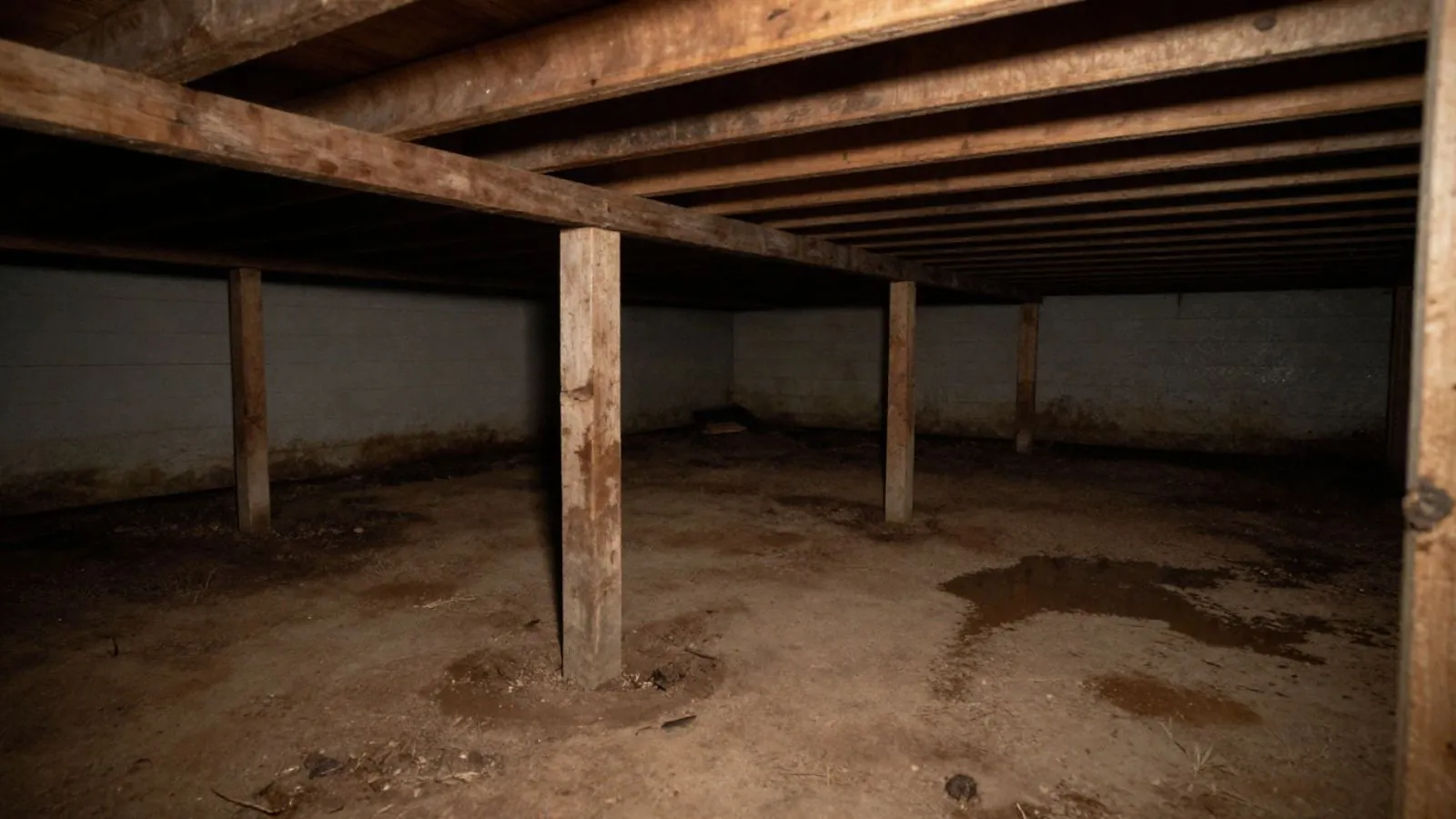
Crawl Space Water Damage Cleanup in Monmouth Junction, NJ
Wet insulation and a damp vapor barrier hide under the floor. Call for crawl space water damage cleanup and drying in Monmouth Junction.
A crawl space is the low void under a floor, and water there damages joists, insulation and the vapor barrier long before anyone sees it inside the house. Crawl space water damage cleanup removes the water, dries the framing and fixes the conditions that let moisture build up.
Call (732) 352-9660 if you see standing water, sagging insulation or smell must from the floor registers. The line is staffed 24/7, and pooled water after a storm is treated as urgent.
Why crawl spaces take on water
Groundwater seeps through foundation walls and the soil floor, plumbing leaks drip onto the vapor barrier, and humid air condenses on cold ducts and pipes. A crawl space without good drainage becomes a damp pocket that never dries.
Rain is the usual trigger. When the ground around the foundation is saturated, water follows footings and enters the void, and low spots in the soil floor collect it.
Signs of crawl space water damage
- Standing water or wet soil after rain.
- Insulation sagging, dark or fallen from the joists.
- A torn, wet or displaced vapor barrier.
- A musty smell from vents and registers.
- Cold, bouncy or cupped floors above the crawl space.
- Visible mold on joists or the underside of the subfloor.
Be careful entering a flooded crawl space
Standing water near wiring, ductwork or a water heater can be dangerous. If water covers any electrical or HVAC equipment, stay out and call the electric utility or 911. A crew enters with protective gear and lighting.
How a crawl space is cleaned and dried
- Remove the water.Submersible pumps clear standing water, then wet vacuums handle the rest.
- Remove wet insulation.Fiberglass that has absorbed water will not recover, so it is bagged and removed.
- Measure the wood.A moisture meter checks joists, beams and subfloor. Wood above the dry range is dried before anything is closed up.
- Dry the space.Air movers and dehumidifiers run until the wood and soil surfaces hold dry readings.
- Restore the barrier.A clean vapor barrier is placed back, with seams sealed to limit future moisture.
Related damage may reach the room above, so see hardwood floor water damage and structural drying for what happens after the crawl space is dry.
| Problem | Fix | Note |
|---|---|---|
| Surface water after storms | Grading and drainage correction | Done by a drainage contractor. |
| Plumbing drips | Plumber repairs the line | Dry the area first. |
| Torn vapor barrier | Replace and seal | Part of restoration. |
| Wet insulation | Remove and replace | Dry joists before reinstalling. |
Crawl spaces and water in Monmouth Junction
Monmouth Junction drains southwest into Heathcote Brook and Devils Brook, so ground that stays wet after storms can push water against foundations. Nearby Kendall Park was built in the late 1950s and early 1960s, and homes of that era are one place to look if you are unsure what sits beneath your floor. We do not have a count of crawl space homes in either community.
If you are not sure what lies beneath your floor, check an access panel in a closet or the exterior foundation vents. A crew can also look during the first call.
What to do before entering a wet crawl space
- Do not enter if water is near wiring, ductwork or a water heater.
- Turn off power to the space only if you can reach the panel dry.
- Wear boots, gloves and a respirator if you must look, and use a flashlight.
- Photograph from the access opening instead of climbing in.
The EPA's guidance on moisture control says the key to mold control is moisture control, and crawl spaces are where moisture goes unnoticed longest. Water entry into crawl spaces is something the agency says should be controlled.
ANSI/IICRC S500 is the reference crews use to classify standing water under a home and to set drying goals. Ground water or sewage in a crawl space is treated as contaminated under that standard, which changes what can be dried in place.
Insurance and crawl space water
Policies tend to cover sudden events such as a burst pipe and exclude groundwater and flood. Photograph the space, the water line on the walls and the damaged materials. The claim decision is between you and your insurer, and we provide a written scope.
Water under the floor? Call and describe what you see.
Call about a crawl spaceFrequently asked questions
Is standing water in a crawl space an emergency?
Treat it as urgent, especially after heavy rain. Call (732) 352-9660, which is answered 24/7, and avoid entering if water covers electrical equipment.
Can wet crawl space insulation be reused?
Fiberglass that has soaked loses its shape and holds moisture, so it is usually removed and replaced after the joists dry.
Will a vapor barrier stop all moisture?
No. It limits moisture rising from soil, but drainage and humidity control also matter. Water entering from outside needs a drainage fix.
Does crawl space moisture affect the house above?
Yes. Moisture can move into the subfloor, flooring and indoor air. A musty smell inside the house is often the first sign.
Active water damage in Monmouth Junction?
Call the 24/7 line and describe what you see. A dispatcher explains the scope and the price before any work starts.
Call (732) 352-9660