
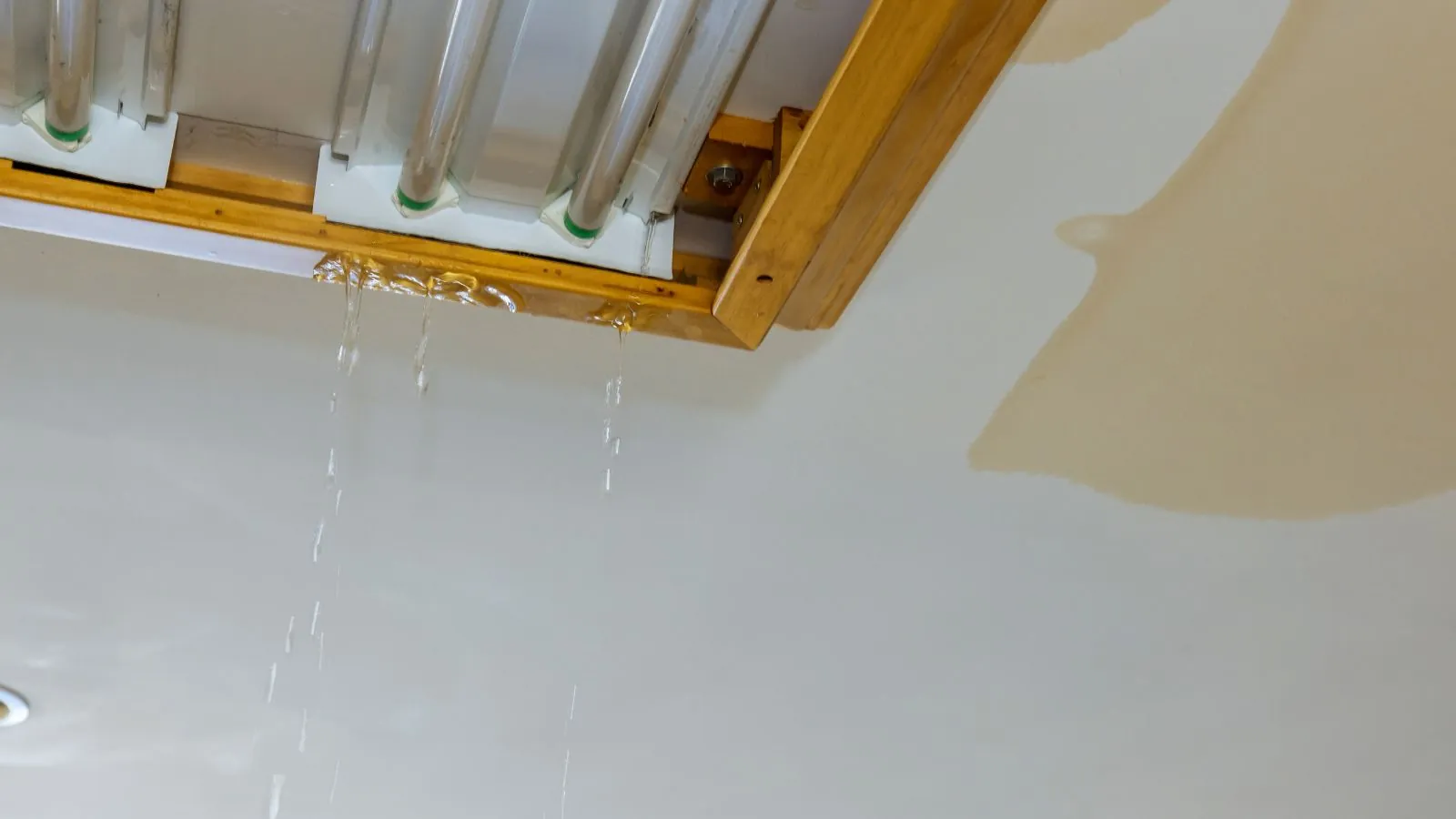
Emergency Ceiling Water Damage in Monmouth Junction, NJ
A wet ceiling can collapse without warning. Call the 24/7 line for ceiling water damage repair and roof leak drying in Monmouth Junction.
A ceiling that is stained, bulging or dripping is an emergency, because saturated drywall is heavy and can fall without warning. The dispatch line is open 24/7, so call as soon as you see it.
Move people and furniture out from under the bulge, put a bucket under any drip and, if water is coming through a light fixture, leave the switch alone and turn off the breaker only if the panel is dry. Do not poke a bulging ceiling unless you are ready for the water behind it.
A sagging ceiling is an emergency
When drywall absorbs water it swells, loses strength and can pull away from its fasteners. A small brown ring may mean a slow leak above, while a bulge usually means water has pooled and is waiting to drop.
A controlled release is safer than a collapse. A crew can puncture the low point of a bulge over a container so the water drains, then remove the wet drywall and insulation before they fail on their own.
Water and light fixtures do not mix
If water drips from a ceiling light, a fan or a recessed fixture, keep the switch off, stay clear and call the electric utility or 911 if you see sparks or smell burning. Turn off the breaker only if you can reach the panel without stepping on a wet floor.
What leaks into a ceiling
| Source | Typical sign | Who fixes the source |
|---|---|---|
| Roof leak at flashing or shingles | Stain after rain, wet attic insulation | Roofer. |
| Upstairs bathroom or laundry | Stain below a fixture, dripping when used | Plumber. |
| Supply line in the attic or ceiling | Steady growth of a stain, water bill rise | Plumber. |
| HVAC condensate in the attic | Stain beneath the air handler | HVAC technician. |
We handle the water damage: extraction, drying and repair of the ceiling and what sits above it. A roofer, plumber or HVAC technician fixes the source, and the two jobs often run side by side.
Roof leaks that damage the ceiling
A roof leak often starts small. Water follows a rafter or a nail, soaks insulation in the attic and shows on the ceiling only after the insulation is saturated, sometimes a few feet from the real opening. Wet insulation loses its value and holds moisture against the framing.
After a heavy storm, check the attic with a flashlight for dark decking, damp insulation or daylight at the roof. Take photographs, since insurers usually want to see the entry point as well as the stain. Our storm water damage page covers wind and rain damage to the whole envelope.
How ceiling water damage is repaired
- Control the water.Drain bulges safely, extract pooled water and stop the source.
- Open and inspect.Wet drywall is cut back to dry material, and the attic is checked with moisture meters and thermal imaging.
- Dry the cavity.Air movers and LGR dehumidifiers dry framing and nearby walls. See structural drying.
- Repair and finish.Drywall is hung, taped and textured to match, and the ceiling is primed and painted.
When water traveled down a wall, wall and drywall repair follows the same approach. Stain-blocking primer covers old marks, but it does not replace removing wet material underneath.
Ceiling leaks in Monmouth Junction homes
South Brunswick Township reported more than 8 inches of rain from the remnants of Hurricane Ida on September 1, 2021, and storms like that find every weak spot in flashing and shingles. Many Monmouth Junction homes are recent, with two stories and upstairs bathrooms and laundry rooms, so plumbing above a finished ceiling is as common a source as the roof.
Roof and structural repairs may need a permit, and the township's Code Enforcement Department administers the New Jersey Uniform Construction Code and issues permits.
What to do while the ceiling is wet
- Keep people out from under a bulge, and set a bucket under any drip.
- Leave switches and fixtures alone if water is coming through a light, and turn off the breaker only if the panel is dry.
- Move furniture and electronics out of the room if you can do so safely.
- Photograph the stain, the attic and any visible roof damage from the ground.
According to ANSI/IICRC S500, wet insulation and drywall that cannot be dried promptly are removed and replaced, which is why a stained ceiling is opened up before it is repaired.
Insurance and ceiling damage
Many policies cover sudden roof or plumbing damage and exclude wear, neglect and flood. Photograph the stain, the attic and the source, and keep damaged material when asked. Contact your insurer early, since the claim decision is theirs and we provide a written scope of the work.
Ceiling bulging or dripping? Call the 24/7 line.
Call about ceiling damageFrequently asked questions
Do you handle ceiling water damage emergencies at night or on weekends in Monmouth Junction?
Yes. The line at (732) 352-9660 is answered 24/7. Tell the dispatcher whether the ceiling is bulging, dripping or only stained, so the crew arrives with the right equipment.
Should I pop a bulging ceiling myself?
Not unless you are prepared. A controlled release over a bucket, with tarps down and people clear, is safer than a collapse. A crew can do this and remove the wet drywall right away.
Can I just paint over a water stain?
Paint hides the mark but not the moisture. If the material behind it is still wet, the stain returns and mold can grow. Confirm the area is dry with a moisture meter before finishing.
Do you fix the roof?
We handle the water damage and dry the structure. The roof itself is repaired by a roofer, and we coordinate the order of work so drying is not repeated.
Active water damage in Monmouth Junction?
Call the 24/7 line and describe what you see. A dispatcher explains the scope and the price before any work starts.
Call (732) 352-9660