
What You Can Dry Yourself After Water Damage in Monmouth Junction, NJ
A small spill on a hard floor is a do-it-yourself job. Water in walls, under flooring or from dirty sources is not.
Not every wet spot needs a restoration crew. A towel and a fan handle a small spill on tile. What matters is how much water, what kind of water and what it touched.
This guide draws the line between jobs you can safely handle and jobs that need equipment and measurement.
The three questions to ask first
- How much water is there?A cup or a few quarts on a hard floor is manageable. Standing water across a room is not.
- Where did it come from?Clean supply water is lower risk. Sewage, floodwater or appliance drain water is contaminated.
- What did it touch?Tile and sealed concrete dry easily. Carpet pad, drywall, insulation and subflooring hold water.
Things you can usually dry yourself
- A small spill on tile, vinyl or sealed concrete.
- Wet towels, clothes and washable fabrics, if the water was clean.
- A shower or sink overflow that stayed on the floor and was wiped up quickly.
- Condensation on a window sill or similar surface.
- Damp plastic or metal items that can be cleaned and dried in the open.
Ventilate the room, run a fan across the area and check again the next day. If anything still feels damp or smells musty, step up to a moisture check.
Things you should not dry yourself
| Situation | Why DIY falls short |
|---|---|
| Water behind walls or under floors | Cannot be seen or reached with fans. |
| Wet carpet pad | Holds water and is hard to dry. |
| Sewage or floodwater | Contaminated, needs protective gear. |
| Water near electrical outlets or the panel | Shock risk. |
| Water that sat longer than a day or two | Mold risk rises. |
Water and power
Never use a household vacuum on standing water or run extension cords across wet floors. If water is near outlets or the panel, call the electric utility or 911 before anything else.
What a fan can and cannot do
A fan moves air, which helps surface moisture evaporate. It does not remove moisture from the air, so humidity can rise and the moisture settles back into materials.
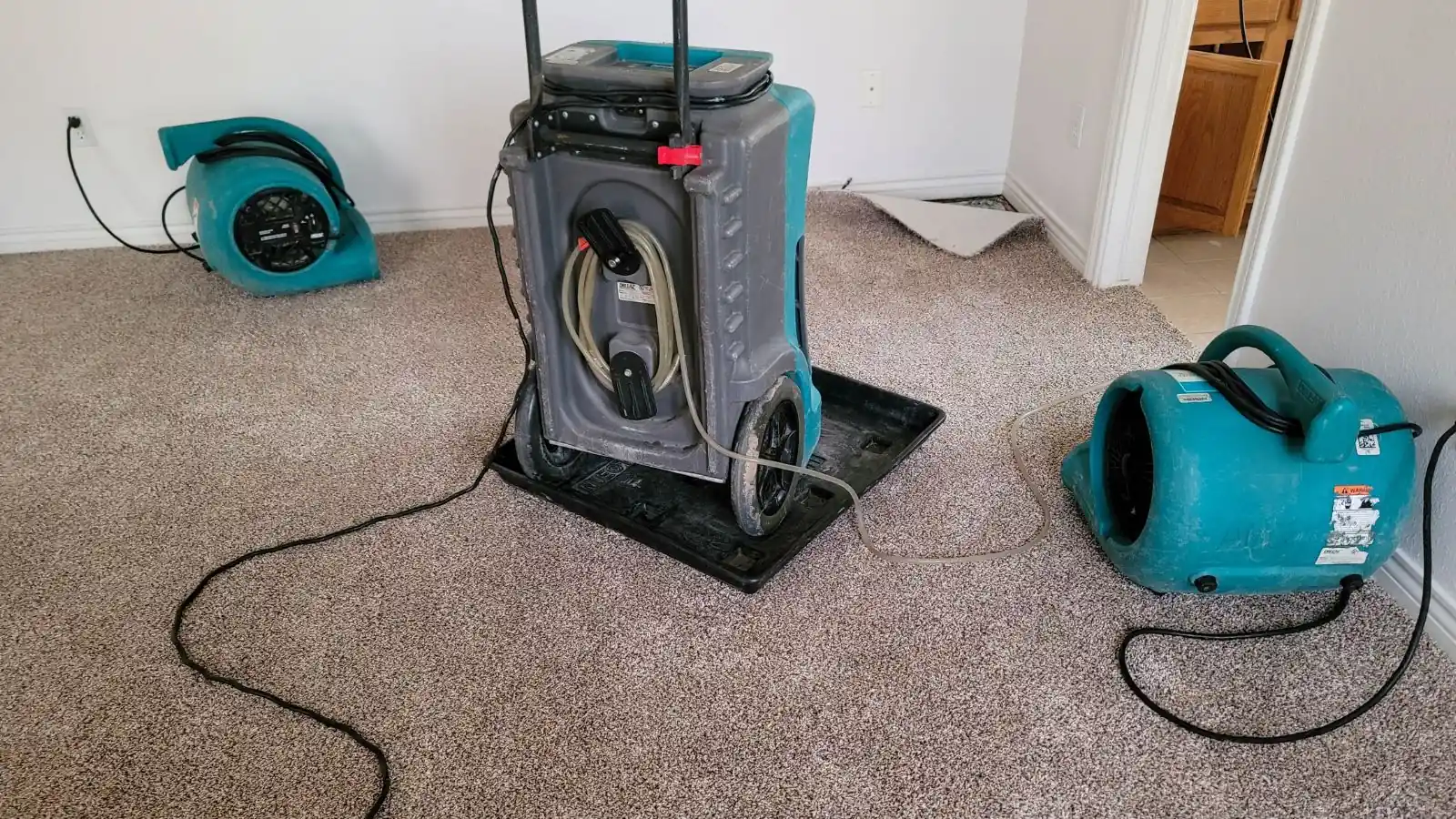
Dehumidifiers pull water out of the air, and professional LGR units do this efficiently at low humidity. Together with air movers they dry structure, which is why structural drying uses both.
How to check whether a wet area is dry
Touch is unreliable. A moisture meter gives a reading you can compare to a dry reference spot in the same material.
If you do not have one, use signs. Cool or clammy surfaces, musty smells, peeling paint and cupping floors all suggest moisture remains.
A simple drying routine for small spills
Remove the water
Mop or blot standing water. Wring and rinse tools.
Lift and prop
Lift rugs and prop up furniture so air reaches underneath.
Add airflow
Run a fan and open windows when outdoor air is dry.
Recheck
Check again after 24 hours. Call if anything is still damp.
Dehumidifiers, fans and the right setup
A household dehumidifier removes moisture from the air in a closed room, so close doors and windows while it runs. Empty the tank often or run it to a drain. Point fans so air crosses the wet surface, and not at a wall where it only stirs the room.
If humidity in the room does not fall after a day, there is more moisture in the materials than a household unit can handle. That is the point to call for a moisture check, since the cost of waiting is higher than the cost of the visit.
Signs a do-it-yourself job has gone wrong
A smell that returns after a day, a floor that cups, a stain that spreads or a wall that feels cool to the touch all mean moisture is still present. Stop and measure instead of adding more fans.
The cost of a moisture check is small next to the cost of replacing drywall or flooring that was sealed in wet.
The EPA recommends drying water-damaged areas and items within 24 to 48 hours to prevent mold growth. That is the clock that matters when you decide whether a fan is enough.
Professional drying follows ANSI/IICRC S500, which sets goals by comparing wet materials to dry reference readings. A homeowner with fans cannot take those readings, which is the practical limit of doing it yourself.
Humid air in central New Jersey
Monmouth Junction sits at about 79 feet above sea level, in central New Jersey where summer humidity can be high. On a humid day, opening windows can bring in moist air, so a dehumidifier does more to dry a room than a window does.
Homes in Kendall Park and Dayton face the same weather. Small spills dry fine with fans, but larger events, such as an overflowing washer, belong with water extraction crews who can measure what the surface hides.
When to stop and call
If you are unsure, call. A moisture check costs less than replacing drywall that was left wet. The dispatch line at (732) 352-9660 is open 24/7, and the dispatcher explains the scope and the price before work starts.
Questions readers ask
Can I dry a flooded basement myself?
Small amounts of clean water, maybe. Anything deeper, contaminated or near power should be handled by a crew.
How long should I run a fan?
Until the area is truly dry, which a moisture meter can confirm. A day or two is common for small spills, but there is no fixed rule.
Will a hair dryer help?
It can dry small surface areas, but it is not a substitute for drying walls or floors.
Is it okay to leave wet carpet in place?
Not for long. Pad holds water, and wet carpet can grow mold. Lift and dry it or call.
What do Monmouth Junction homeowners do first?
Stop the source, remove standing water, lift rugs and run fans, then call if the area does not dry within a day.
Need help with water damage now?
Call the 24/7 line and describe what you see. A dispatcher explains the scope and the price before any work starts.
Call (732) 352-9660