
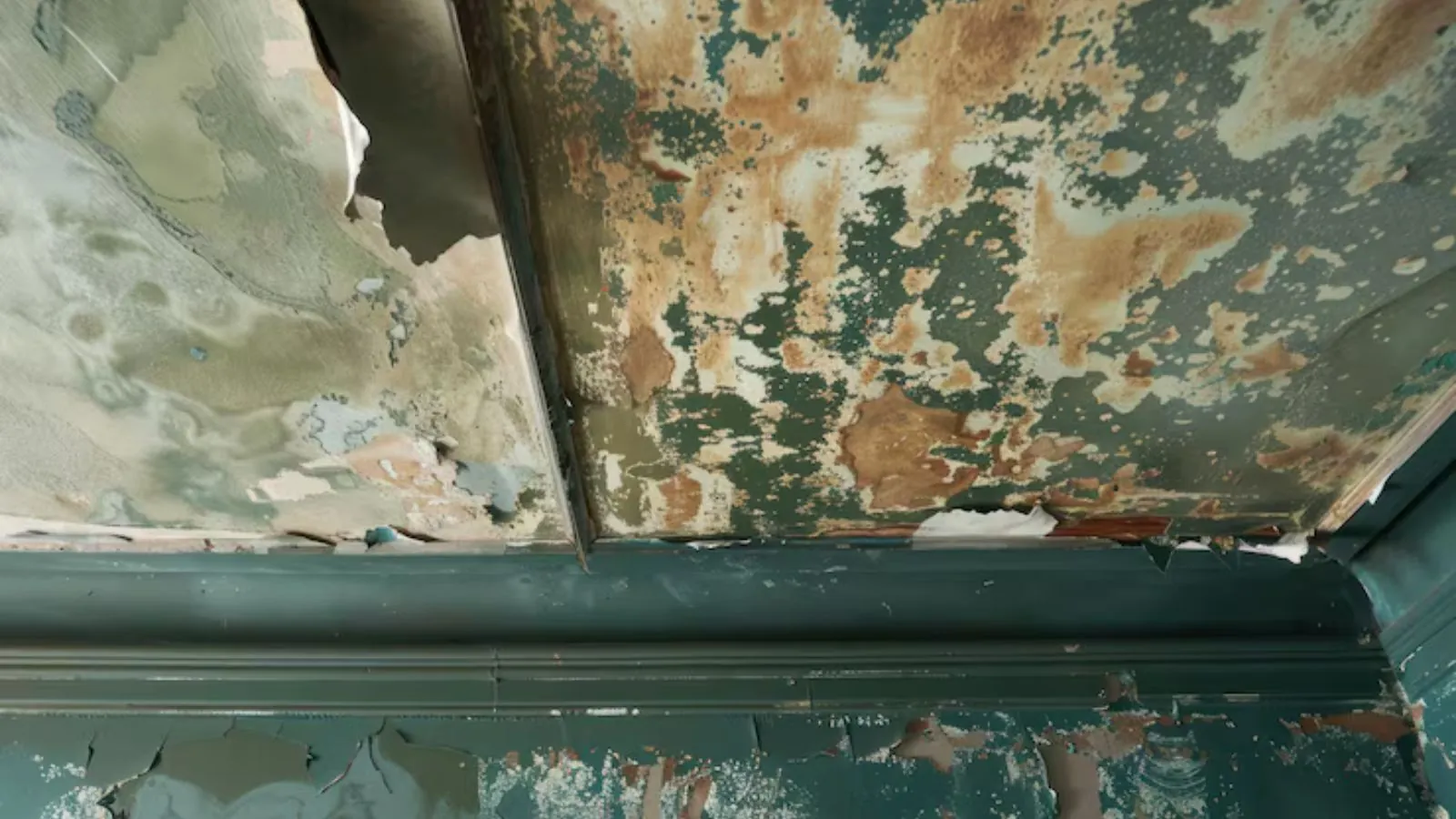
How to Remove Mold From Walls in a Monmouth Junction, NJ Home
What a small patch on a painted wall needs, what a spreading stain behind drywall needs and how to keep it from coming back.
Mold on a wall almost always means moisture is present, so removing the growth is only half the job. The other half is finding why the wall was damp and drying it, or the stain returns.
This guide covers the difference between a surface patch and growth that has gone into the drywall, with safe steps for each. Large areas and wet walls call for professional help.
Start by finding the moisture
Look for a cause before you clean. Common sources are a leaking pipe in the wall, a failed window seal, a roof leak, high indoor humidity or condensation on a cold exterior wall.
A moisture meter shows whether the wall is wet right now. If it is, cleaning will not hold, because mold regrows on damp material.
Surface growth on painted drywall
Small areas on sealed, painted surfaces can sometimes be cleaned. Wear gloves, eye protection and a mask rated for fine particles, open a window and keep the area closed off from the rest of the home.
Use a damp cloth with detergent and water, wipe once and discard the cloth in a sealed bag. Do not dry-scrub, sand or blow air at it, because that spreads spores.
What not to do
Do not mix bleach with ammonia or other cleaners. Do not paint over mold without fixing the moisture. Do not run a fan toward the growth, which pushes spores into other rooms.
When drywall has to come out
- The drywall is soft, crumbly or stained through to the back.
- Growth appears on the paper face and on the inside of the wall.
- The affected area is larger than a few square feet.
- The wall was wet for more than a day or two.
- Insulation behind the wall is damp.
Drywall and paper are porous, so growth goes into them. Removal and replacement is the reliable fix once that happens.
| What you see | Usual action | Next step |
|---|---|---|
| Small surface spots on dry, painted wall | Clean carefully | Fix humidity. |
| Spots with a damp wall | Dry first, then reassess | See structural drying. |
| Soft or bulged drywall | Remove and replace | See wall and drywall repair. |
| Growth across large areas | Professional containment | See mold remediation. |
How professionals handle wall mold
A remediation crew isolates the area with plastic barriers and negative air, removes affected drywall and insulation, cleans framing and verifies dryness with moisture meters. HEPA vacuums and damp wiping capture fine dust.
The practice follows industry guidance such as ANSI/IICRC S520. After the area dries, new drywall is hung and finished.
Preventing mold on walls
Control humidity
Use bath fans and a dehumidifier in damp rooms, and vent dryers outdoors.
Fix leaks fast
Repair roof, window and plumbing leaks as soon as they appear.
Watch cold walls
Furniture pushed tight to exterior walls traps moisture. Leave an air gap.
Dry after events
After any water event, dry the wall cavity, not just the surface.
What testing can and cannot tell you
People often ask whether they need a lab test. A test can identify what kind of mold is present, but it does not change the basic plan, which is to fix the moisture, contain the area and remove affected material. Air samples also vary a lot from hour to hour.
A moisture meter and a visual inspection of the wall cavity answer the questions that decide the work. Ask any contractor what they would do differently depending on a test result, and be wary of any answer that makes testing the center of the job.
Painting and finishing after removal
After drywall is replaced and the cavity is dry, prime with a stain-blocking primer before painting. Use a mold-resistant paint in humid rooms if you like, but remember that paint is not a moisture fix.
Keep an eye on the repaired area for the next several weeks. A new stain at the edge of the patch means moisture is still reaching the wall.
Tight, newer homes hold moisture
Monmouth Junction counted 3,170 housing units in 2020, up from 919 in 2010, so much of the housing is recent. Tighter construction saves energy and also holds humidity, which means a small leak or poor ventilation can produce wall stains in rooms that seem well maintained.
If a stain appears in a home in Kendall Park, Dayton or Monmouth Junction, check for a moisture source first. A damp wall is a wall and drywall problem before it is a cleaning problem.
When to call for help
Call if the area is larger than you can safely handle, if the wall is wet or soft or if the growth returns after cleaning. The dispatch line at (732) 352-9660 is open 24/7, and the dispatcher explains the scope and the price before work starts.
Questions readers ask
Can I remove mold from walls with vinegar or bleach?
Surface spots on sealed paint may respond to detergent and water. Bleach and vinegar do not fix porous material or the moisture behind it. Never mix cleaning chemicals.
Is painting over mold acceptable?
No. Paint covers the stain but not the growth or the moisture, and the problem returns.
How do I know if mold is inside the wall?
Signs include a musty smell with no visible source, soft drywall, bulging paint and moisture meter readings above normal. A thermal imaging camera can help locate wet areas.
Does a dehumidifier help?
It helps control humidity, but it does not remove existing growth. Use it alongside repairs.
What does a Monmouth Junction homeowner do first?
Stop any leak, keep the area closed off and call to have the wall measured with a moisture meter.
Need help with water damage now?
Call the 24/7 line and describe what you see. A dispatcher explains the scope and the price before any work starts.
Call (732) 352-9660