
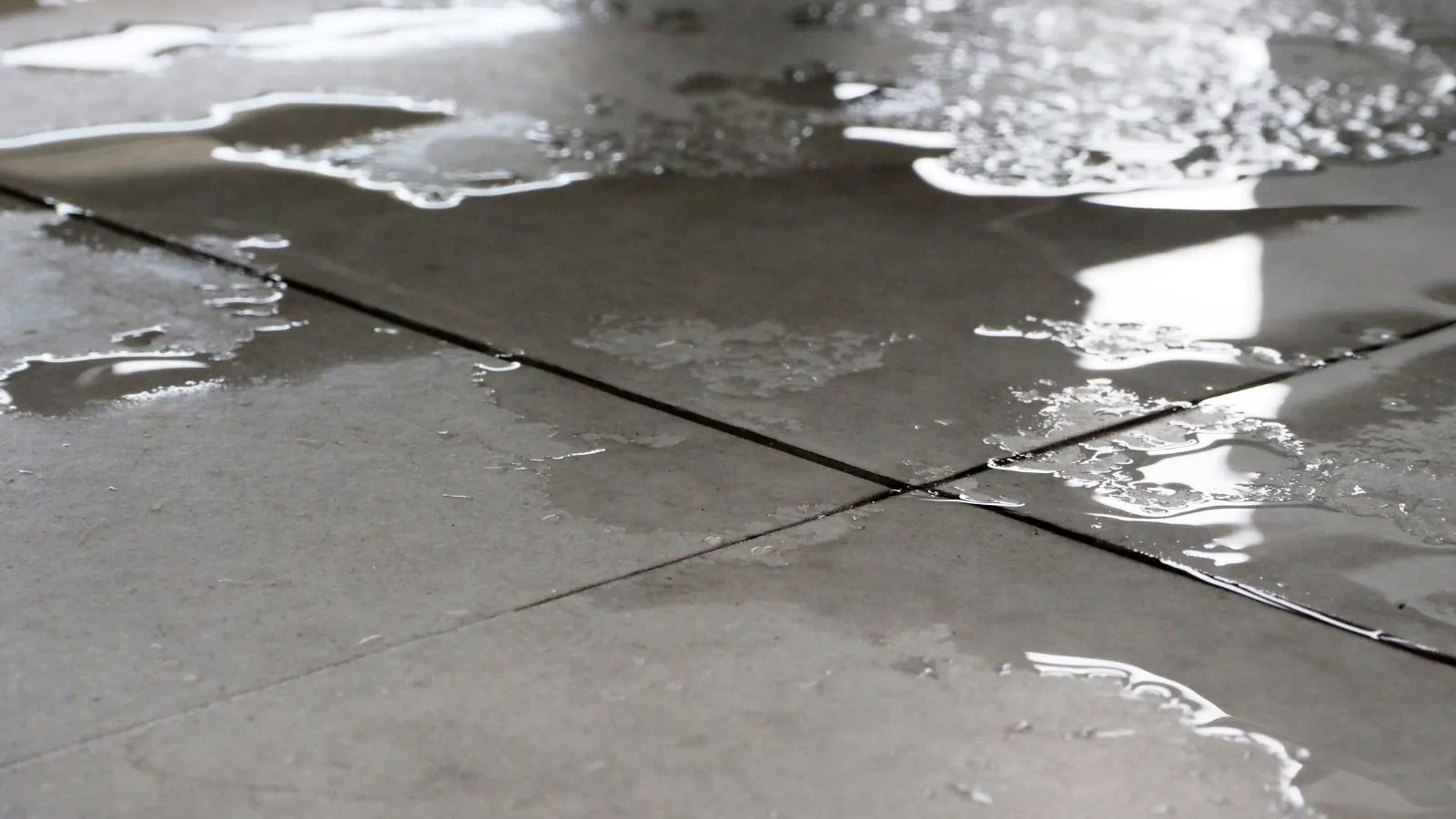
How to Find a Hidden Water Leak in Your Monmouth Junction, NJ House
A meter test, a bill comparison and a few visual checks narrow most hidden leaks down before anyone cuts a wall.
Hidden leaks are expensive because they run for weeks without being seen. The signs are often a bill, a smell or a stain, and each one points to a different test.
This guide walks through the checks a homeowner can do safely, and the ones that need a plumber or a moisture meter.
Start with the water meter
- Turn everything off.Stop all water use, including the dishwasher, washing machine and ice maker.
- Read the meter.Find the meter and note the leak indicator or the low-flow dial.
- Wait.Wait an hour without using water and read it again.
- Compare.If the dial moved, water is leaking somewhere between the meter and your fixtures.
A moving meter with everything off is a strong sign of a leak. A plumber can then isolate which line.
Read your water bill
Compare this month's usage to the same month last year. A jump with no change in your routine is a flag.
South Brunswick Township Utilities and New Jersey American Water each serve parts of the township, so look at your bill to see which one reads your meter and how to contact them.
Check the toilets
Put a few drops of food coloring in each toilet tank and wait 15 minutes without flushing. If color appears in the bowl, the flapper is leaking.
Toilet leaks are silent and common, and they can waste many gallons per day without any visible water.
Look for signs in walls, floors and ceilings
- Stains, bubbling paint or peeling wallpaper.
- A musty smell with no visible source.
- Warm spots on the floor, which can point to a hot water line.
- Sound of running water with every fixture off.
- Baseboards or flooring that lift, cup or darken.
- Cracks that appear in a slab or foundation wall.
Tools professionals use
Moisture meter
Reads moisture in drywall, wood and concrete without cutting.
Thermal imaging camera
Shows temperature differences that mark wet areas behind surfaces.
Acoustic leak detection
Listens for the sound of water escaping from a pressurized line.
Pressure test
Isolates sections of pipe to find the leaking run.
Plumbers find and repair the leaking line, while restoration crews map and dry the damage. If a leak has already wet the structure, the structural drying page explains the next step.
| Sign | Possible source | Where to read |
|---|---|---|
| Meter moves, floor warm | Slab hot water line | Slab leak. |
| Stain on ceiling | Roof, upstairs plumbing or HVAC | Ceiling water damage. |
| Damp cabinet floor | Sink or dishwasher line | Kitchen water damage. |
| Musty basement corner | Wall seepage or pipe | Basement water damage. |
Leaks outside the walls
Not every hidden leak is inside the house. A line between the meter and the foundation can leak into the yard, and an irrigation line can run for weeks. Soft, unusually green or soggy patches of lawn with no rain are worth a call to a plumber.
Also check outdoor spigots, the hose bib connections and the sump discharge line. A cracked outdoor fitting can drain into a wall cavity through the rim joist, where it shows up in the basement as a damp corner.
What to do once you find the leak
Shut off the water to the affected line or the whole house, then photograph the wet area and the fixture or pipe involved. Call a plumber for the repair and note the date and time in your records.
If the structure is wet, start drying right away. Water that reached drywall, insulation or subflooring does not leave on its own, and a plumber's repair does not dry it. A moisture reading after the repair shows how far the water went.
According to the EPA's WaterSense program, the average household's leaks waste nearly 10,000 gallons of water each year, and about one in ten homes loses 90 gallons or more per day. Those figures explain why a meter test is worth ten minutes.
What the housing boom means for hidden leaks in Monmouth Junction
The 2020 census counted 3,170 housing units in Monmouth Junction against 919 in 2010. Newer homes keep supply lines, ice maker lines and drain connections inside finished walls and under finished floors, so a failing fitting can run behind drywall for a long time.
In Kendall Park and Dayton, the mix of older and newer homes means both aging copper and new flexible lines are possible leak sources. A yearly walk-through with a flashlight under sinks and around the water heater catches many of them.
When to call
Call a plumber if the meter test is positive. Call the dispatch line at (732) 352-9660 if the leak has already stained a ceiling, wet a floor or soaked a wall, since drying and moisture mapping are time-sensitive.
Questions readers ask
How long can a hidden leak go on?
Weeks or months, depending on size. Bills, smells and stains are usually the first signs.
Can a hidden leak cause mold?
Wet drywall, insulation and wood can support mold if they stay damp. Finding and drying the leak early is the best prevention.
Do I have to cut a wall to find a leak?
Not always. Moisture meters and thermal imaging often locate the wet area without opening much.
Is a leak always visible on the meter?
A leak beyond the meter shows there. A leak on the drain side may not, so look for stains and smells too.
Who do I call first in Monmouth Junction?
Call a plumber for the leak and the dispatch line for drying if the structure is wet.
Need help with water damage now?
Call the 24/7 line and describe what you see. A dispatcher explains the scope and the price before any work starts.
Call (732) 352-9660